
C1.4 "Breakwell Lecture" - Autonomous Spacecraft Scheduling Yielding Scalable and Safe Earth and Space Object Imaging
Symposium: C1. IAF ASTRODYNAMICS SYMPOSIUM
Session: 4. Guidance, Navigation and Control (2)
Day: Wednesday 7 October 2026
Time: 10:15 GMT+3
Room: Hall 8
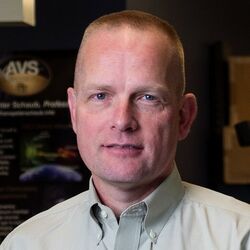
The use of machine learning and neural networks has become an enabling technology for spacecraft operations and mission development. This talk discusses recent work to research means to schedule spacecraft tasking operations using a shielded neural network. Both single and collaborative multi-satellite scenarios are explored, with an emphasis on space-based Earth and spacecraft imaging mission concepts that move beyond static tasking toward adaptive, learning-enabled autonomy.
In particular, the work expands into novel research on coordinated multi-agent Earth observation, where constellations of satellites dynamically allocate sensing responsibilities over evolving regions of interest. These include persistent monitoring of geographically distributed targets, responsive retasking for transient events, and coordinated circumnavigation strategies in which multiple spacecraft maintain distributed vantage points around a region to improve temporal resolution and viewing geometry. The research also considers emerging concepts in space-to-space imaging, where spacecraft observe not only the Earth but also other satellites, enabling new capabilities in on-orbit inspection, situational awareness, and cooperative navigation. Such architectures introduce fundamentally new scheduling challenges, where sensing geometry, line-of-sight constraints, and inter-satellite dependencies must be resolved in real time.
The overarching goal is to develop scalable scheduling solutions that are efficient to compute on-board, robust to uncertainties in spacecraft state and trajectory modeling, require minimal communication across satellites, and remain resilient as satellites are added to or removed from the operational network. Rather than relying on centralized control, the approach emphasizes decentralized decision-making, where individual agents leverage offline learned policies while maintaining collective mission performance. Shielded neural networks play a central role by embedding safety and operational constraints directly into the learning architecture, ensuring that autonomous decisions remain within physically and mission-relevant bounds.
These studies are trained and validated using the open-source, physics-based Basilisk spacecraft simulation framework, which provides high-fidelity modeling of spacecraft dynamics, environments, and sensing interactions. This enables the training of neural networks under realistic conditions, including orbital perturbations, sensor limitations, and communication constraints, thereby improving the transferability of learned policies to flight systems.