Published on July 13, 2026
Meet the 2026 IAF Emerging Space Leaders!
We are pleased to introduce the brilliant students and young professionals who will receive a grant to participate in the 77th International Astronautical Congress (IAC 2026) taking place in Antalya, Türkiye from 5 - 9 October 2026.

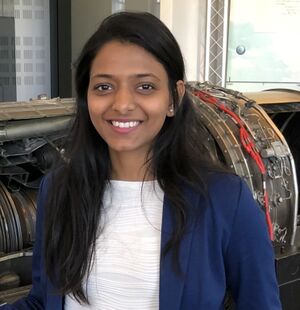
Muhammad Afaq
Inspired by the way wasps and other insects create their habitats layer by layer using natural materials like mud and clay, Muhammad Afaq developed an early fascination with additive manufacturing and nature-inspired engineering. This curiosity led him to pursue research in advanced manufacturing technologies and their application to aerospace systems.
Afaq is a Mechanical Design Engineer and Engineering Systems graduate from the Skolkovo Institute of Science and Technology (Skoltech), Russia, where he graduated with Honors as a fully funded scholar. He also holds a Bachelor’s degree in Mechanical Engineering from the University of Engineering and Technology (UET), Lahore. His interests include additive manufacturing, spacecraft structures, composite materials, and systems engineering.
His master’s research, Evaluation of the Suitability of Additive Manufacturing for CubeSat Structures, explored the use of additive manufacturing for lightweight satellite components through experimental testing and numerical simulations. Professionally, he has worked in both Russia and Pakistan on multidisciplinary engineering projects involving structural analysis, composite structures, and high-reliability engineering systems.
Afaq believes that the future of space exploration depends on international cooperation, knowledge sharing, and technological innovation. Having studied and worked in diverse international environments, he values collaboration as a key driver of scientific progress and sustainable growth in the global space sector.
Being selected for the IAF Emerging Space Leaders Grant Program would be a significant opportunity for Afaq. Coming from Pakistan, where opportunities to engage directly with the international space community remain limited, participation in the International Astronautical Congress would enable him to share his work, learn from global experts, and build meaningful connections with fellow space professionals from around the world
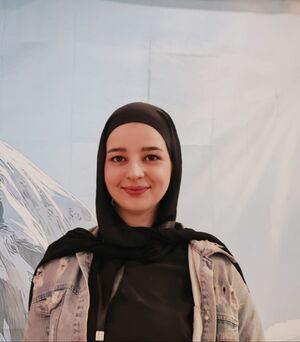
Shrutika Agarwal
Shrutika Agarwal is a Systems Engineer at Airbus Defence and Space, where she contributes to the development of next-generation communication satellites that support sovereign capabilities and global connectivity.
She holds a Master's degree in Space Systems Engineering from TU Delft in the Netherlands and a Bachelor's degree in Aerospace Engineering from SRM University in India. Throughout her academic and professional journey, she has contributed to satellite, lunar rover, and rocket projects, building expertise in systems engineering and multidisciplinary collaboration.
Within Airbus, she serves on the leadership team of a space-focused community network, working with management to support professional development, outreach initiatives, and employee engagement.
Shrutika is an active volunteer and leader within the Space Generation Advisory Council, serving in roles including Finance Manager, Scholarships Team, PADAWANS, and delegate at international events. She actively fosters connections between industry and young professionals, creating opportunities for emerging talent to engage with the global space community. She actively supports outreach and mentorship initiatives, encouraging greater participation from underrepresented communities in the space sector.
Shrutika is dedicated to advancing space technologies, fostering international collaboration and creating opportunities for others to contribute to and benefit from the global space ecosystem.

Mustapha Agbadi
Mustapha Agbadi is a space lawyer, governance strategist, and advocate for the Democratisation of Outer Space, with a career spanning international commercial law, space policy, and emerging space economies.
Currently serving as Space Governance and Strategic Relations Manager at Beta Space Ltd, Mustapha leads the development of strategic partnerships with space agencies, universities, and legal institutions across Africa, the Middle East, Asia, and Latin America. He spearheads the Beta Space Annual Space Governance Report and hosts the company's flagship podcast on space governance challenges in emerging space economies.
Mustapha holds a Master of Laws in Space Law from Northumbria University, where his thesis examined Emerging Space States' Perspectives on the Democratisation of Low Earth Orbit, a question that continues to shape his professional work. His legal career includes senior roles in international commercial law, where he advised on high-value cross-border transactions and supported bid processes for a UK Space Startup.
Beyond his professional roles, Mustapha actively contributes to the global space community. He is a member of the International Institute of Space Law (IISL), including its Working Group on the International Law Aspects of Interplanetary Internet, and the Space Generation Advisory Council's Remote Sensing for Environmental Protection Research Group. He was a delegate in the Open Lunar Foundation's DOOR Project on lunar resources governance, and a recipient of awards from the Secure World Foundation, American Institute of Aeronautics & Astronautics, and the Association of Commercial Space Professionals.
Mustapha believes that inclusive and equitable space governance is not merely a legal imperative. It is the foundation upon which a sustainable and shared space future must be built.
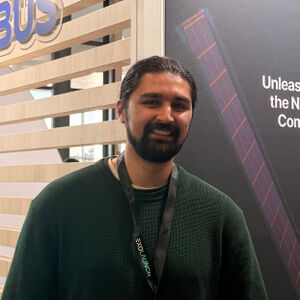
Diana Aljboor
Diana Al-Jbour is Jordanian - Ukranian aerospace engineer with focus on systems engineering and Thermal Control systems. She is currently completing her Bachelor’s degree in Aeronautical Engineering at Jordan University of Science and Technology (JUST). Diana is the founder and coordinator of the student CubeSat project “AlRhim Sat,” which received a free launch opportunity through the UNOOSA/EXOPOD 2024 round. The satellite is under development and has passed main critical design stages and is scheduled to launch mid 2027.
Diana gained valuable experience by completing an internship with Astrostructures Ltd., where she contributed to thermal engineering and space systems engineering activities on live projects. Her technical interests include spacecraft thermal control, CubeSat systems, lunar exploration technologies, and multidisciplinary systems engineering and MBSE.
In addition to her technical work, Diana has actively contributed to the international space community where she actively participated in project like space station design project held at TUM, Germany, small satellite group SGAC , ASTRAEUS e.v where she contributed to thermal control system for lunar projects including Small satellite, lunar settlement and ECLSS. Diana actively supports engaging the community with the space industry she mentored and invited as guest speaker to many events locally for university and school students and internationally like AACII held , Nuremberg 2025, Goethe institution girls day. in addition to her research presentations and leadership activities. She has presented her research at the International Astronautical Congress (IAC) for three consecutive years: Paris 2022, Baku 2023, and Milan 2024. She has also received several international grants and recognitions representing Jordan, including support from AIDAA, the UN/IAF programme, and the SGAC Middle East Space Leader Award. She was part of organizing team of Middle east space generation workshop held at Ankara, where she moderated a working group and a panel in CubeSat topic
Diana believes that space technology and international collaboration can play a key role in empowering emerging space nations and inspiring future generations in the developing region.

Omar Aristizabal
I am Omar David Aristizabal Sanmartin, a recent graduate Aerospace Engineer from Universidad de Antioquia, Colombia. Throughout my academic journey, I have actively participated in research, educational, and outreach initiatives. Among the most significant was co-founding and leading Volta Experimental Rocketry Team, the first formal rocketry team in my University, and a pioneer group of these initiatives within the country. Through this team, we became the first Colombian university group to represent the nation at the International Rocket Engineering Competition (IREC), competing in both the 2025 and 2026 editions. In addition, I contribute as an instructor in aerospace bootcamps and as a volunteer in STEM events that promote aerospace related fields in Colombia.
As I begin my professional career, I remain committed to creating opportunities that inspire others to pursue ambitious goals. I strongly believe that aerospace is not a distant field reserved for a few countries or organizations; it is a discipline with real world applications and a growing community of talented professionals capable of making meaningful contributions from anywhere in the world.
The aerospace industry is fundamentally global, making internationalization an essential part of professional growth. Access to diverse perspectives, industry practices, and collaborative networks is critical for understanding the sector’s dynamics and staying relevant throughout one’s career. Programs such as this create valuable opportunities to build those connections while bringing together people who share a passion for advancing aerospace. I am deeply grateful for this opportunity, not only because of what I can learn, but also because it aligns with my long-term goal of inspiring others and helping create environments where more people can grow, collaborate, and contribute to the future of aerospace.

Adriana Ariza Pardo
I grew up fascinated by the Moon and by the natural world, asking how the landscapes around us came to be. That curiosity led me to study Geosciences in Colombia, and over the past years I have focused on volcanology and planetary sciences. I am currently a Visiting Researcher at the Institut für Planetologie, University of Münster (Germany), as part of my PhD in Geosciences at the Università di Chieti-Pescara (Italy), where my research centres on lunar geological mapping and In-Situ Resource Utilisation (ISRU).
I hold an MSc in Geosciences from the University of Texas at San Antonio. There, with NASA Ames Research Center, I measured the rheological and thermal properties of Martian analog lavas using compositional data from Gusev Crater collected by the Spirit rover. My fieldwork has taken me to the active Deception Island volcano in Antarctica, to the Bolívar Cays in the Caribbean for sedimentological work, and to the Canary Islands for submarine volcanology. I have presented my research at the Lunar and Planetary Science Conference, on lunar regolith analogs and the thermodynamic behaviour of Martian lavas.
Science should know no borders. Talent exists everywhere, and planetary exploration advances most rapidly when researchers from different countries contribute their expertise and perspectives. As an Emerging Space Leader, I want to strengthen planetary geology across Latin America and encourage young people who dream of working in space to follow that path

Alberto Báez Jiménez
Alberto Báez Jiménez is a consultant, economist and entrepreneur from Mexico City, holding dual degrees in Economics and Business Administration from ITAM, where he studied as a Baillères scholar. He is co-founder of Dataztlán, an AI and data tech firm whose mission is to democratize knowledge and make complex technologies accessible beyond technical elites.
His work bridges the social and technical dimensions of complex coordination problems. In his career, he has trained over 100 public officials and designed dialogue processes that have reduced staff turnover across organizations. At GLEX 2025 in New Delhi, he presented research applying restorative justice to peaceful coordination in space, a line of work he extends at IAC 2026 with a paper examining the risks of AI centralization in space programs.
Alberto believes humanity's expansion into space cannot advance in isolation, as the problems humanity carries only grow as our technical capabilities advance, and will follow us unless we confront them first.
Coming from Latin America, a region with emerging space capabilities, he is committed to ensure that the governance, cooperation, and inclusion we struggle to achieve on the ground become foundations of how we coordinate our shared future in space.
As the first in his family to publish research, speak English, and travel beyond the Americas, he sees representation as a catalyst: when people from non-traditional backgrounds enter global conversations, they expand what others believe is possible.
For him, the question was never whether space belongs to us, but when we'd remember it always has.
Darren Berlein
Darren Berlein is a South African space architect helping to define the next generation of human spaceflight in the post-ISS era. He is currently working as a Station Layout Mechanical Engineer within a European commercial space station programme, designing how people may live, work and adapt in orbit as space habitation becomes more permanent and more accessible.
His role bridges the gap between hardware engineering and human habitability, translating technical constraints, operational needs and human factors into decisions about how space habitats are conceived, organised and experienced by the astronauts. This means designing environments that function both as technical space systems, while supporting astronaut health, psychological well-being and daily operational performance during long-duration space missions.
Darren holds a Master of Architecture from the University of Cape Town (UCT) and a Master of Space Studies from the International Space University. His nearly ten-year career spans architectural design, habitat layout engineering, interior design and design communication for multidisciplinary teams. He previously taught architectural design at the UCT and serves as an expert lecturer in Human Factors at the annual Space Station Design Workshop, where he trains the next generation of space station designers.
As a South African professional working within the European human spaceflight sector, Darren works to connect established space agencies with developing space programs. He advocates for broader international collaboration, aiming to include experts from non-traditional spacefaring nations in the design and construction of future orbital habitats.
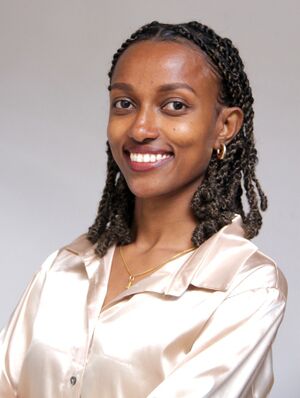
Feven Alemu Beyecha
Feven is a space engineer and researcher at the Ethiopian Space Science and Geospatial Institute (SSGI), where she serves in the Satellite Operation Lead Executive. She has a background in Electronics and Communication Engineering and Data Science from Vellore Institute of Technology (VIT), India. She further expanded her expertise with a certificate in Data Analytics using Python from CDAC, Delhi and completed with distinction a program in Artificial Intelligence Policy at CAIDP (2025), including research, writing, and policy analysis.
At SSGI, Feven is part of the team building Ethiopia's second remote sensing satellite, ETRSS‑2, and leads the project that transforms raw satellite data into products for agriculture, urban planning, and environmental monitoring. She also works on a fixed‑wing VTOL project, integrating electronics and AI into flight systems.
Feven has trained at the China Academy of Space Technology (CAST) and the China Aerospace Science and Technology Corporation (CASC) in China. She was selected by the AfSA for a training program at the European Space Agency (ESA) in Belgium, gaining hands‑on experience in space systems engineering, from mission design to launch. She attended the 9th African Space Generation Workshop in Nairobi (2025) and was recognized as a young leader through the DTA Program by RLC‑EA in collaboration with Kenyatta University, Kenya, and inspires Ethiopian kids through the Ethio Space Kids Club (ESKC) program.
She believes African space programs belong at the global table, and that international cooperation is how emerging space nations grow. As an IAF Emerging Space Leader, she wants to learn, share, and build bridges between emerging and established space nations.

Chaima Bhibah
I am Chaima Bhibah, a Tunisian engineering student specialising in experimental astrochemistry, currently conducting research at the LIRA laboratory (CY Cergy Paris Université / Observatoire de Paris-PSL / CNRS) on H/D isotopic exchanges during the sublimation of interstellar ice analogues under extreme astrophysical conditions.
My journey into space began not in a laboratory, but under the open skies of Tunisia, where I fell in love with the cosmos at the age of twelve. That wonder never left me — it guided me from founding and leading astronomy clubs, to representing Africa at the first Pan-African Astronomy School in Madagascar, to be trained on site to use the telescope of the “Observatoire Astronomique Ecole du monde de Besely - Madagascar”. Beyond the manipulation of the telescope, participants also benefited from astronomy and astrophysics courses, learned image acquisition and processing techniques, carried out concrete measurements, and attended several enriching mini-conferences.
This comprehensive training will now allow them to control the telescope remotely from their respective countries, opening up new opportunities for astronomical research and observation across the continent.
Receiving the IAF Emerging Space Leaders Grant is far more than personal recognition — it is a signal that the global space community believes in voices from regions that are still underrepresented in space science. Africa and the Arab world carry extraordinary scientific potential, and young researchers from these regions deserve a seat at the table where the future of exploration is decided.
Space is the most universal endeavour humanity has ever undertaken. No atmosphere, no border, no language contains it. International cooperation is not just a strategy — it is the only way forward. I am proud to contribute to that shared mission, and deeply grateful to the IAF for making it possible
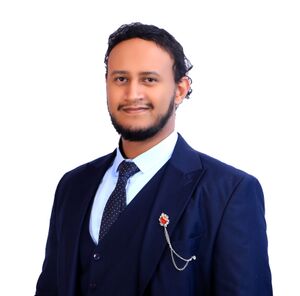
Zelalem B. Bogale
Zelalem B. Bogale is an Aerospace and Machine Learning Engineer with a BSc in Engineering from École Centrale de Nantes, France, and an MBA with a Gold Medal distinction from American College of Technology. His work sits at the intersection of autonomous flight, space systems, and artificial intelligence, spanning the design, prototyping, and systems integration of specialized UAVs, hybrid rockets, and small satellites, alongside machine learning perception and sensor fusion systems for autonomous remote-sensing platforms. He began his aerospace career at the Space Science and Geospatial Institute before expanding into international remote roles across technology and engineering sectors. Zelalem has published scientific papers in leading journals, including the International Journal of Space Science and Engineering, and leads an international research working group under the International Astronautical Federation Advisory Committee on History Activities documenting the institutional and technical history of Africa’s aerospace sector. His expertise is reinforced through advanced professional training, including a NASA-led Systems Engineering Workshop and a full scholarship to the Space Station Design Workshop in Germany as a Systems Engineer. His contributions have earned international recognition, including the African Space Leader Award in Zimbabwe (2023), an Italian Space Agency Fellowship in Italy (2024), selection as the NASA Space Apps Challenge Local Lead for Ethiopia (2022), and an invitation as a guest speaker at GITEX Africa in Morocco (2024).

Melissa Cardona González
I am Melissa Cardona González, a recently graduated Aerospace Engineer from Universidad de Antioquia, Colombia. Throughout my academic journey, I actively participated in a variety of research and outreach initiatives. Among the most significant was co-founding and leading Volta Experimental Rocketry Team, the first formal rocketry team at my university and the first Colombian team to represent the country at the International Rocket Engineering Competition (IREC), competing in both the 2025 and 2026 editions. In addition, I contribute as a science communicator at the Medellín Planetarium, where I participate in monthly outreach activities focused on aerospace science and technology. As I begin my professional career, I remain committed to fostering new initiatives within my community and demonstrating that aerospace science is not something distant or inaccessible. On the contrary, it has practical applications that impact our daily lives, and there are talented local professionals actively contributing to this field.
The aerospace industry is inherently international and highly interconnected. This is why initiatives that bring together people from around the world are so valuable: they create opportunities for networking, knowledge exchange, collaboration, and the development of lasting professional relationships. Building bridges between emerging generations of students and young professionals is essential for advancing the aerospace sector, particularly in countries where the field is still developing. At the same time, these connections provide more established aerospace communities with access to talented individuals who can contribute fresh perspectives, innovative ideas, and new opportunities for growth within the industry.
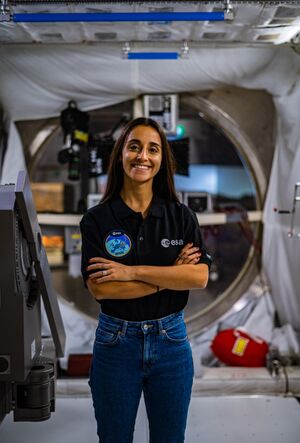
Marilia De Almeida Carvalho Matos
Marília de Almeida C. Matos is currently the Ground Segment Engineer for Space Rider in the Directorate of Space Transportation, at the European Space Agency, responsible for all the activities related to the development, validation and operations of the Space Rider ground segment and landing site.
She was the Ground Segment & Operations co-lead for a voluntary young-led project at ESA called “YPSat – Young Professionals Satellite”, that was launched in 2024 on board Ariane-6 and successfully completed all its mission objectives. Marília was also the Operations Task Manager during the World Biggest Analog - the largest synchronized analog mission ever attempted – sitting at the Mission Control Room in Vienna.
She holds a master’s degree in aerospace engineering since 2019 from Instituto Superior Técnico, in Portugal, which includes a study semester at the Universitat Politecnica de Catalunya, in Spain. In 2026 she finishes her Executive MBA in Space Architecture from TU Wien, after receiving a scholarship from Women in Aerospace – Europe, an organization for which she volunteers since 2023.
She believes that Space is a place we are not meant to explore alone. It is a challenging environment that only makes sense through collaboration, being it for science discoveries or technologies advancements, that benefits humanity as a whole. In the current complex geopolitical landscape, it is worth reflecting on the Apollo-Soyuz historic handshake in orbit in 1975 and how Space can bring nations together. Space does not know borders.
Marília loves to read, play futsal, scuba dive and to travel.

Phoebe Dunbabin
Phoebe Dunbabin is a PhD candidate at the University of New South Wales (UNSW) in Sydney, Australia. Her research seeks to uncover how gravitational changes are first perceived at the molecular and cellular levels; work she hopes will bring us closer to understanding why human health is so negatively impacted by microgravity in space. Phoebe initially pursued a Bachelor of Medical Science at UNSW, graduating with First Class Honours for her work with the Poole Group characterising the molecular force sensors that regulate cancer cell behaviour. The group subsequently expanded their focus to explore how force sensing molecules influence cellular responses to microgravity, creating an opportunity for Phoebe to finally combine her passions for human health and space. Her work now revolves around developing simple model systems for studying the impact of microgravity on Earth-based biology, information that is vital for extending human survival in the hostile and isolated environment of space. Beyond research, Phoebe is a casual academic working across physiology and neuroscience courses in the UNSW Faculty of Medicine and Health. She also works as a mentor for UNSW Equitable Learning Services, supporting undergraduate students with disabilities to excel in their studies. Phoebe is a strong advocate for the recognition of life science as a critical element of the future space economy. She believes this will be achieved not only through increasing opportunities for life science research, but also through the promotion of cross-disciple collaborations that draw on expertise from multiple sectors to solve long-standing issues.
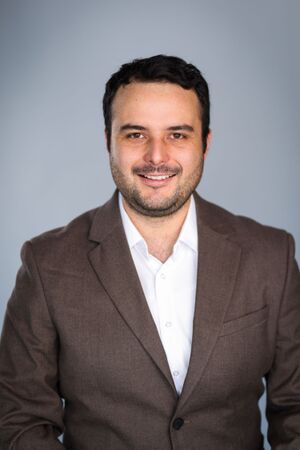
Leonardo Ociel Espinoza Zepeda
Leonardo began his academic path in Physics at the Autonomous University of Baja California (UABC), where he conducted astronomy research and became actively involved in science communication. He later completed a specialization degree in the aerospace industry at the Ensenada Institute of Technology and an M.Sc. at UABC, where he developed simulations for a CubeSat testbed.
Motivated to specialize in astrodynamics, Leonardo sought opportunities abroad and is now a Ph.D. candidate in Aerospace Engineering at the University of California San Diego, working with Prof. Aaron J. Rosengren. His research focuses on spacecraft dynamics around icy moons using nonlinear dynamics and perturbed multi-body models to support mission design and orbital analysis.
His work has been presented at different venues, including meetings of the American Physical Society, the American Astronomical Society, the American Astronautical Society, and the Mexican Society of Astrobiology. His recognitions include the SG-Nebula Award, the Youth Science Award from his hometown of Ensenada, and a state-level youth award from the Government of Baja California.
Beyond research, Leonardo is committed to teaching, mentorship, and outreach. He has organized academic events and workshops through Clubes de Ciencia, the Youth Scientific Society, the International Association of Physics Students, and the Space Generation Advisory Council. He is especially interested in international collaboration and has promoted binational academic connections across the U.S.–Mexico border. His long-term goal is to contribute to future space exploration missions while expanding opportunities for students and young professionals in Latin America and the global space community.
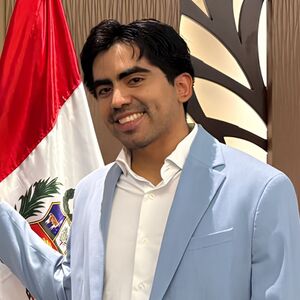
George Steve Fajardo Soria
George Fajardo is a Peruvian mechatronics engineer and incoming master's student in the System Design and Management (SDM) program at the Massachusetts Institute of Technology (MIT). He currently serves as a Research Assistant at the Directorate of Space Technology of the Peruvian Space Agency (CONIDA), where he contributes to satellite development, systems engineering, and national space capacity-building initiatives.
His journey in the space sector began at the National University of Engineering in Peru and has been shaped by international experiences in Mexico, Russia,USA, China, and other countries. Through academic exchanges, technical training programs, and international conferences, he has collaborated with students, researchers, and professionals from diverse backgrounds, strengthening his commitment to international cooperation in space activities.
George has contributed to projects involving CubeSats, sounding rockets, space weather research, and satellite systems engineering. He has also supported educational and outreach initiatives aimed at expanding access to aerospace opportunities for students and young professionals. His current interests include satellite technology roadmapping, systems engineering, space policy, and the role of space technologies in sustainable development.
He believes that international cooperation is essential for enabling emerging space nations to develop their own capabilities while contributing to the global space community. By sharing knowledge, resources, and opportunities, countries can accelerate innovation and ensure that the benefits of space technology reach a broader segment of humanity.
As a recipient of the 2026 IAF Emerging Space Leaders Grant, George looks forward to exchanging experiences and building collaborations with fellow young space leaders from around the world.
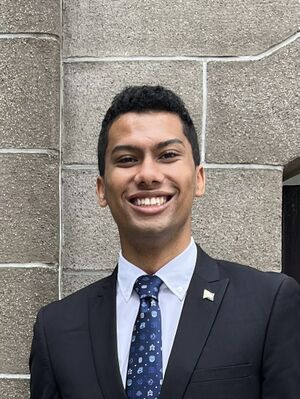
Ezra Fielding
Ezra Fielding is a doctoral researcher at the French Space Agency (CNES) and the National School of Civil Aviation (ENAC) in Toulouse, where he focuses on distributed computing for satellite swarms. Originally from Cape Town, South Africa, he holds a Bachelor of Science and Honours degree in Computer Science from the University of the Western Cape, and a Master's degree in Electrical and Space Systems Engineering from the Kyushu Institute of Technology, completed through the United Nations/Japan Joint Fellowship on Post-Graduate Study on Nano-Satellite Technologies (PNST). His work spans the intersection of computer science and space systems engineering. At Kyutech, he contributed to the VERTECS 6U nanosatellite mission as payload interface lead, developing the Camera Control Board for the mission's imaging payload. His broader research interests have included the application of artificial intelligence and machine learning to satellite operations, and he currently develops scalable, fault-tolerant distributed architectures for next-generation autonomous space missions. Ezra views international cooperation not as a backdrop to his career, but as its defining thread. Having studied and worked across three continents, from South Africa to Japan to France, he has experienced firsthand how diverse perspectives strengthen both research and the communities built around it. He remains committed to contributing to the growth of the African space ecosystem and to fostering cross-cultural collaboration in the space sector.
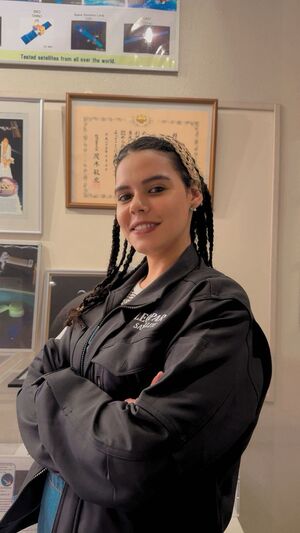
Sara Aziz
I am an Egyptian PhD candidate at Kyushu Institute of Technology, Japan, where I conduct research on lunar dust mitigation technologies for future lunar exploration missions. My work focuses on investigating the behavior of lunar dust in plasma and electric field environments and developing hybrid dust mitigation techniques to minimize dust accumulation and its adverse effects on solar panel performance.
Before coming to Japan, I worked as a Research Assistant at the National Authority for Remote Sensing and Space Sciences (NARSS) in Egypt. In this role, I contributed to mission analysis activities for EgyptSat-1 and the NARSS CubeSat program, conducted my master's research on the effects of picosecond laser exposure on space-grade solar cells, and collaborated with the Egyptian Space Agency on the development of an educational satellite project for undergraduate students.
In Japan, I have been actively involved in satellite development projects, including the BIRDS-X 2U CubeSat and the LEOPARD 3U CubeSat, where I contributed to the Electrical Power Subsystem (EPS). I currently support the TURAN 6U CubeSat project as a senior team member. These experiences have provided valuable hands-on expertise in satellite design, integration, testing, and mission operations.
After completing my studies in Japan, I hope to contribute to the growth of Egypt’s space sector by sharing my knowledge and experience with young engineers and researchers. I believe that empowering the next generation of space professionals is essential for strengthening Egypt’s role in the global space community and advancing future space exploration efforts.

Dave Loui Gumarang
Dave Loui Gumarang is a final-year Bachelor of Science in Mechanical Engineering student at Iloilo Science and Technology University (ISAT U), Iloilo City, Philippines. As an aspiring aerospace engineer, he holds that the most valuable skills are those equally relevant to daily life and space exploration. This belief is reflected in his undergraduate research on Philippine public utility vehicle brake systems, where the study of vehicle dynamics and safety systems builds transferable expertise he intends to carry into future applications in lunar and extraterrestrial vehicle engineering.
Beyond academics, Dave founded the ISAT U Space Society (ISS), a student-led organization that brings space science and technology applications (SSTA) directly into Filipino communities through malls, parks, coffee shops, and streets. By deliberately stepping outside institutional settings, his outreach has reached diverse demographics across socioeconomic backgrounds, transforming space from a distant concept into a tangible and locally relevant reality. This work was presented at the 31st Asia-Pacific Regional Space Agency Forum (APRSAF-31), contributing to regional dialogue on inclusive and community-based space education.
As an active volunteer of the Philippine Space Agency (PhilSA), Dave champions a philosophy rooted in the practical impact of SSTA, where satellite-driven agricultural monitoring, disaster preparedness, and environmental protection are everyday tools that serve every Filipino.
Coming from an emerging space nation, Dave understands that the greatest barrier to space education is not capability but perception. His work challenges the notion that space belongs exclusively to developed nations, positioning it instead as a shared human endeavor accessible to every community. He believes international cooperation is most meaningful when it amplifies the underrepresented, because the true measure of humanity's progress in space is whether its benefits reach every person on Earth.
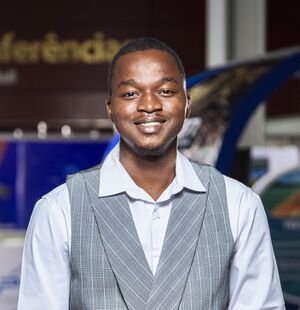
Mustapha Iderawumi
Mustapha is a Senior Analyst and Media Team Lead at Space in Africa, where he has spent over five years building the definitive intelligence base for the continent's space economy. He has led two valuations of the African space industry, establishing a 2021 baseline of $19.49B, a 2024 value of $24.95B, and projecting $39.52B by 2030, figures that have become the global reference for policymakers, investors, and analysts engaging with Africa's space ecosystem.
As a lead researcher on the African Union Commission's baseline studies, Mustapha produced comprehensive assessments of space technology's socioeconomic impact across the continent, work that continues to shape the Agency's operationalisation. Currently, he leads Space in Africa's research, consulting, and media operations, managing end-to-end engagements for clients across Africa, Europe, the Americas, and Asia. His team maintains Africa's largest database of space activities and produces widely referenced annual reports on industry trends, satellite markets, and space budgets.
Mustapha believes international cooperation is the single most critical mechanism for levelling the global space playing field. For emerging nations with limited resources, joining forces with established global partners allows them to strategically leapfrog decades of trial and error. By leveraging shared knowledge and technology transfer, new entrants can bypass the costly infrastructure mistakes made by pioneering nations, drastically accelerating their development timelines and efficiently and sustainably scaling their domestic space capabilities. For Africa especially, strategic international partnerships are the smartest path to building a sovereign, competitive, and sustainable space future
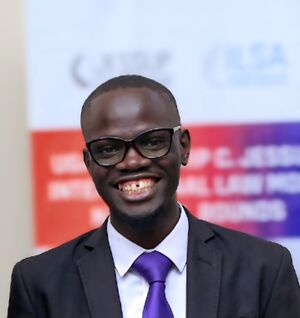
David Kasibante
David Kasibante is a space law and policy specialist based in Uganda. He researches, advises and writes about the intersection between international space law, diplomacy and policy and third-world perspectives. He has been involved in law and policy drafting of space policies and laws for four states and speaks in international and national fora on this subject. He provides oversight over the African Region under the Space Generation Advisory Council and chairs the space sustainability sub-committee of the East African Law Society, which advises on space-related matters to 8 states in the East African Community. David believes that Africa is not late to space, but rather to space governance and he is an advocate for the amplification of African voices in the rooms where space matters are decided. He also currently advises the government of Uganda as a state attorney in the Ministry of Justice and Constitutional Affairs. David holds a Masters Degree in law and several certifications in space law, policy, medicine and engineering.
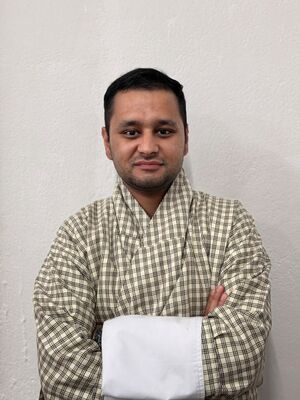
Niraj Koirala
I am Niraj Koirala, a space technology professional at the Division of Telecommunications and Space, Government Technology Agency of Bhutan. I hold a Bachelor of Technology in Mechanical Engineering and have over four years of experience spanning satellite operations, national policy, and spacecraft development.
Bhutan's space office is mandated to lead all space, satellite, and telecommunications development nationally, oversee regulatory frameworks, and implement space applications across government agencies. Within this mandate, I have established VHF/UHF/S-band ground stations at colleges across the country and trained students at technical institutions in satellite operations to build capacity among young Bhutanese students in satellite operations.
Currently, I serve as the ADCS and Flight Software Lead for Bhutan's first 6U CubeSat development project, a role that sits at the core of my professional identity. In this capacity, I am responsible for testing and validation of the attitude determination and control system, as well as the onboard flight software architecture. I also contributed as a member of the team that formulated Bhutan's National Space Strategy, which outlines the country's vision for leveraging space science and technology for national development.
Beyond engineering, I am deeply interested in the economics of the space industry. I believe the sector's rapid commercial growth and technological innovation present transformative opportunities for emerging space nations like Bhutan, and I am committed to ensuring my country can meaningfully participate in and benefit from that future.
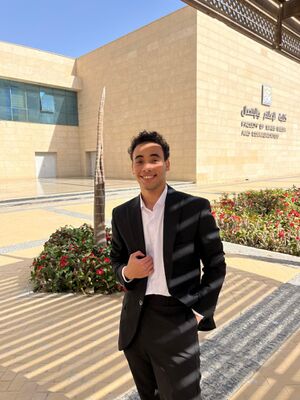
Youssef Maaod
There's a line in Interstellar that never left me: "We used to look up at the night sky and wonder at our place in the stars. Now we just look down and worry about our place in the dirt. " I was a teenager in Suez, Egypt, when I watched that film. I chose to look up.
Growing up, I wanted to add something permanent to human knowledge—the way Einstein reframed gravity, the way Hinton taught machines to see. I didn't know the path. I just knew the direction: outward.
And that direction wasn't easy. I come from a family with no scientific tradition in a city that doesn't appear on any astronomical map. There was no obvious road from Suez to the stars. So I built one out of what I had—code, data, and stubbornness.
That path led me to the Egyptian Space Agency, to 10 publications across IEEE, IAF, and Springer Nature before finishing my undergraduate degree, and to being selected as a 2026 IAF Emerging Space Leaders grantee. IAC 2026 will be my first time leaving Egypt to do science.
I believe space is the only domain where humanity is genuinely forced to cooperate— where no single nation owns the data, the problems, or the answers. The universe doesn't care about borders. Neither should we. What excites me about international cooperation isn't the diplomacy. It's the idea that the next breakthrough might come from Suez.
I intend to be part of that.
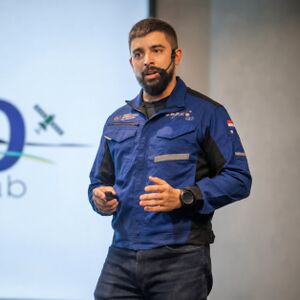
Anibal Antonio Mendoza Ruiz
Anibal Mendoza is a Paraguayan Aeronautical Engineer and MSc in Space Systems Engineering from Kyushu Institute of Technology, Japan. He currently serves as Director of Industrial, Commercial and Competitiveness Development in the Aerospace Sector at the Paraguayan Space Agency, where he contributes to the development of Paraguay’s national space capabilities, international cooperation initiatives, and small satellite projects.
He has been actively involved in Paraguay’s satellite development efforts, including GuaraniSat-1, the country’s first satellite, developed within the BIRDS-4 constellation, as well as the KITSUNE 6U CubeSat project. He is currently involved in GuaraniSat-2, where he is responsible for satellite integration, CAD design, structural configuration, and environmental testing activities. His work has included assembly, integration, and environmental test campaigns related to vibration, thermal vacuum, shock, antenna deployment, fit checks, and functional verification.
His professional background combines satellite engineering, aerospace project development, aviation, quality management, and education. He also serves as Quality and SMS Manager at an aircraft maintenance company, leading certification, audit, safety management, and compliance processes with civil aviation authorities and international operators. In academia, he teaches aerospace-related subjects at the Polytechnic Faculty of the National University of Asunción, including Aerodynamics, Computer-Aided Design and Manufacturing, and Aircraft Construction and Mechanics. He is also a licensed aircraft pilot.
Through his work, he aims to contribute to the growth of Paraguay’s space sector, strengthen international cooperation, and support the development of new generations of aerospace professionals in emerging space nations.

Marabe Dona Beatrix
Dona Marabe is a Filipina researcher, aerospace engineer in-the-making, mechanical engineering student, and aspiring astronaut with the goal of securing the Philippines' space in space. She takes pride in forging her own path while clawing her way through male-dominated first-world centered fields lit by other Filipino visionaries that have come before her, armed by grit and passion, and supported by scholarships and hopeful communities. Her personal advocacies are centered in science communication and equality for women in STEM.
Since focusing her personal goals to becoming the first Filipino astronaut, she has served as the Philippine Space Agency's first ever volunteer intern under the Spacecraft Mechanical and Autonomous Systems Development Division, launched her university's first rocket and can satellite, published her university's first solo-authored space-related research paper in the 76th International Astronautical Congress, led the pitch to a team that won a satellite data ideathon hosted by the Space Generation Advisory Council (SGAC) and the European Space Agency (ESA), and started an on-going work on a Masters thesis aligned with biomimicry in aircraft surfaces.
As a dreamer from an emerging space nation in Southeast Asia, more specifically, from the crowded and bustling streets of Metro Manila, she aspires to be the proof of how far curiosity and persistence can take you. Ultimately, her goal is for more Filipinos who grow up curious about the sky to see themselves as part of the space community, and not just observers of it

Onyinye Nwankwo-Omoloja
Dr. Onyinye Nwankwo-Omoloja is a space physicist and postdoctoral research fellow in Climate and Space Sciences and Engineering at the University of Michigan. Her research focuses on space weather, ionosphere thermosphere coupling, geomagnetic storm impacts, and the use of physics based models and observations to understand upper atmospheric variability. She previously worked as a Scientific Officer at Nigeria’s National Space Research and Development Agency, where she supported upper atmospheric instrumentation and space physics research. Dr. Nwankwo-Omoloja has research experience across Nigeria, Brazil, Japan, and the United States, and is committed to advancing international collaboration, mentoring, and capacity building in space science, especially for emerging space communities.

Eunice Olubayo
Eunice Olubayo is a Mechanical Engineer, aerospace researcher, and an active leader in international space advocacy. She currently serves as the National Point of Contact for Nigeria at the Space Generation Advisory Council (SGAC), where she leads a network of over 1,200 young Nigerian space professionals. She is also the Event Manager for SG[Nigeria] and Marketing Executive for the Africa Space Economy, Innovation, and Communication Conference with NASRDA, where she coordinates international partnerships that mobilize over 1,500 global delegates. Eunice is currently a Master’s student in Space Technologies and Business at the University of Luxembourg. Her technical background is rooted in system architectures for Smart Lunar Habitats and research into alternative non-hydrocarbon fuels for hypersonic vehicles. Beyond her engineering work, Eunice is deeply committed to gender equality and youth development in STEM. She has directly mentored girls and women through initiatives like the Boeing-FASESA Pathways to Space program and DCSI Africa, where she has directed STEM projects that have reached over 10,000 Africans.
Eunice believes that Africa’s future in space will be shaped by the brilliance of its youth and the courage of its women. Her vision is to strengthen cross-continental collaboration, build sustainable space systems initiatives, and effectively integrate local African technical talent with the global aerospace market..
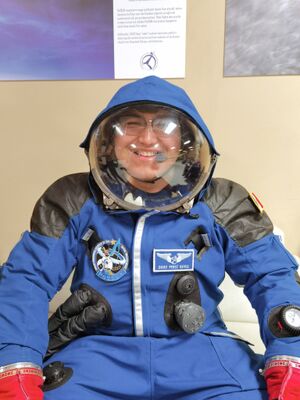
Diego Pérez Reyes
Diego Pérez Reyes is a Mexican mechatronics engineer from ITAM, analog astronaut, and emerging space researcher working across space systems, artificial intelligence, quantum technologies, advanced manufacturing, and deep-tech development. He completed a lunar analog mission at the LunAres Research Station in Poland at the minimum eligible age for participation and later trained for spaceflight at the International Institute for Astronautical Sciences through Project PoSSUM’s Advanced Space Academy in Florida.
He is the founder of Quantum Lab ITAM, one of the first undergraduate-led quantum technology research groups, where he has promoted research seminars, technical education, and student-led projects in quantum computing and emerging technologies. He currently serves as Director of Engineering, Research & Development at Dataztlán, a Mexican tech-firm developing AI, data, cloud, and software engineering solutions for companies and emerging industries, while advancing initiatives in quantum machine learning, small satellites, AI and computer vision, quantum communications, robotics, and space hardware development.
His international research activity includes IAC 2024, where he presented work on additively manufactured ceramic rocket nozzles for low-cost experimental propulsion. At GLEX 2025, he presented four papers on satellite state estimation using liquid neural networks, wooden CubeSat structures, AI-assisted deep-space crew operations, and peaceful space coordination through restorative justice, receiving a Best Presentation award.
Diego believes emerging space nations must move from consuming space technology to building it. His work seeks to bring deep-tech development to Latin America, expand access to space-enabled tools beyond specialized institutions, and use international cooperation to turn local talent into lasting technological capacity.
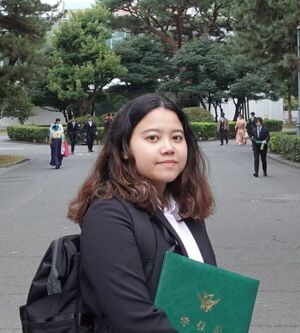
Ei Phyu Phyu
Ei Phyu Phyu is currently an intern engineer at King Mongkut's University of Technology North Bangkok (KMUTNB). She was awarded a Rotary Yoneyama Memorial Foundation Scholarship to pursue a Master's degree in Electrical and Electronics Space System Engineering at the Kyushu Institute of Technology, Japan. Her research focuses on the optimization of cushioning materials for low-impact shock testing of lean satellites. During her Master's studies, she contributed to the KITSUNE 6U and BIRDS-X 2U satellite projects. She earned her Bachelor's degree in Mechatronics Engineering from Pyay Technological University, Myanmar.
She also participated in the KNACKSAT-2 3U satellite project development from King Mongkut's University of Technology North Bangkok (KMUTNB) Academic Challenge of Knowledge Satellite, where she worked on the design and development of the antenna deployment subsystem. Antenna deployment subsystem plays a critical role in enabling reliable communication and data transmission between the satellite and ground stations.
Currently, she is participating in the development of antenna subsystems and deployable solar panel systems for CubeSats. Beyond her technical work, she serves as the National Point of Contact for Myanmar at the Space Generation Advisory Council. She is passionate about advancing STEM education and fostering greater engagement in space activities among young people in Myanmar
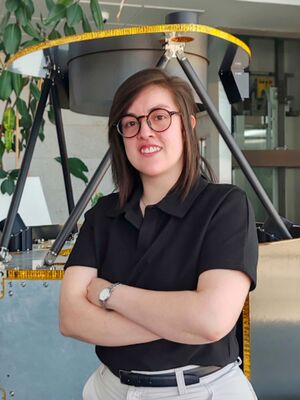
Karen Nicole Pirazan Villanueva
A mix of engineer and space advocate, I’m an aeronautical engineer from Colombia, currently based in Spain. I work as a Systems Engineer consultant at Indra Space (via Ad Maiorem), contributing to VMMO (Volatile and Mineralogy Mapping Orbiter) and SPOCK (Smart Processing Orbital Cloud Konstellation) projects.
I previously worked with the Colombian Aerospace Force, where I supported the development of FACSAT-2 Cubesat and contributed to the FACSAT-3 constellation concept. I was recognized as a Young Researcher by MinCiencias (2022) and as an Outstanding Graduate from my “alma mater” Universidad de San Buenaventura.
Beyond my technical work, I really enjoy being part of the space community. Within SGAC, I was Co-Manager of SG Colombia 2025 and now support SG Spain 2026. In 2023, I took part in the World Space Forum, where I presented ideas on how to increase space awareness among younger generations. In 2025, I was one of the five global winners of the UNOOSA Space4Youth Essay Competition with my work “Educating Educators: A Regional Approach to the Social Appropriation of Space Knowledge.”
I’ve also been part of Fundación Cydonia as an engineer, and I’m currently involved with ACMA and Fundación BeArte, supporting more inclusive access to space education.
For me, space is a place of opportunity; challenging, inspiring, and worth sharing. I’m not trying to go to space, but to build the systems that get there. And outside of all this, I practice boxing; it keeps me grounded, focused, and reminds me that progress comes and one punch at a time

Zamara Rodriguez
Zamara Rodríguez is a space policy and workforce development professional with a multidisciplinary background in law, international relations and space governance. She holds a Bachelor of Laws from Colombia, a Master of International Law and Diplomacy from the Australian National University, and is currently completing a Bachelor of Laws in Australia.
Zamara works with the Space Industry Association of Australia, where she leads work across policy, workforce development, industry engagement and international partnerships. Her work focuses on strengthening Australia’s sovereign space capability, supporting industry growth, and ensuring that workforce development is treated as a national strategic priority.
She has contributed to the development of national space workforce initiatives, including the establishment of Australia’s first national space mentoring program, designed to connect emerging professionals with experienced leaders across the sector. She has also led and supported programs focused on student pathways, skills development, industry capability mapping, international engagement and advocacy for a stronger and more inclusive Australian space ecosystem.
Zamara’s professional interests sit at the intersection of space law, national security, international cooperation and workforce capability. She is particularly passionate about building practical pathways for young professionals, students and underrepresented groups to participate in the space sector.
Her perspective on space is grounded in cooperation, responsibility and shared opportunity. She believes international collaboration is essential to ensuring that space activities are sustainable, peaceful and beneficial to all. Through her work, Zamara seeks to contribute to a more inclusive and globally connected space sector, where emerging space nations and diverse voices are part of shaping the future of space.

Elizabeth Sanchez Chang
Elizabeth “Liz” Sanchez Chang is a lawyer and founder based in Washington, D.C. Raised across the US, Mexico, and Korea, with a background in law and business from IE University in Madrid and American University Washington College of Law, Elizabeth approaches space law through a global and interdisciplinary lens.
She has held roles at Blue Origin, Vast Space, and Schroeder Law PLLC, with experience spanning commercial space station licensing, satellite regulation, and emerging space policy. As a 2025 Matthew Isakowitz Commercial Space Scholar, she is also among the first selected for the program’s law and policy track.
Liz is the founder of the American Space Law Foundation, whose mission is to pioneer American space law through education, research, and professional development. Its flagship Moot Court Competition, the first of its kind, brings together law students, practitioners, judges, and experts to address the field’s most pressing legal questions. Through her work, she has collaborated with institutions including the Commercial Spaceflight Federation, the Smithsonian National Air and Space Museum, and AIAA.
Liz’s work is built on the conviction that space law must be accessible, grounded in science, and shaped by the full range of international space stakeholders. She believes no nation, company, or institution can build the next era of space activity alone, and that lasting progress will depend on international cooperation, shared responsibility, and legal frameworks that endure across borders.

Alina Sandra Santander Vinokurova
Alina Santander Vinokurova is an aerospace engineer and science communicator from La Paz, Bolivia. Her interest in space started when she was very young. She earned her bachelor’s degree in Mechatronic Engineering from Vaughn College, where she graduated as valedictorian, and also studied physics at Universidad Mayor de San Andrés. Later, she completed a Master's in Aeronautics and Astronautics at Stanford University as a Knight-Hennessy Scholar.
Alina represented Bolivia in international science olympiads and co-founded the country's first NASA Human Exploration Rover Challenge team, which won the competition twice. She has also been named an Aviation Week 20 Twenties honoree and a Brooke Owens Fellow, both highly respected awards for new talent in aerospace in the United States.
Alina has worked at Zipline International, where she developed sensor and perception systems for autonomous delivery drones, and at Honeywell-Intelligrated, where she worked on industrial automation. She has published research with AIAA and LACCEI.
Outside of her technical work, Alina runs a Spanish-language STEM platform that reaches tens of thousands of followers in Latin America, and she mentors young women and future engineers throughout the region. By connecting Latin American talent with the global space community, Alina believes that space exploration grows stronger through international teamwork and inclusive representation. Her goal is to make space more accessible, diverse, and truly reflective of the world.

Ekaterina Seltikova
A scientist by training, Ekaterina began her career in research centres in Russia and France, working as a computational physicist across combustion, cryogenics, and turbulence. She has worked with institutions including INSA Lyon, the French Alternative Energies and Atomic Energy Commission, and the French National Centre for Scientific Research.
Throughout her career, she has led and contributed to multiple space initiatives: led a conceptual lunar rover design team, co-led the LUNEX Prosper team developing a blueprint toward a sustainable human presence on the Moon in collaboration with Luxembourg Space Agency, and conducted microgravity research culminating in a flight campaign with Aurelia Institute (USA). More recently, Ekaterina founded Parsec Scale to support technology-to-market pathways and help translate science into practical impact.
Ekaterina is active in international professional communities, including GEGSLA, where she contributes to technical coordination around standards, information sharing, and infrastructure. She also serves as Program Manager for the IAF IPMC Young Professionals Leadership Development Programme, providing training and leadership opportunities in the field of project / program management for young professionals worldwide. Previously, she contributed to Health & Help as a Development Officer, supporting access to medical aid in remote regions of Guatemala and Nicaragua.
Her work has been recognised through the Foresight Institute’s Fellowship (USA) and the SGAC European Space Leader Award. Ekaterina is interested in high-impact initiatives, emerging technologies, and innovation ecosystems. She sees space as a frontier for progress: a place where science, international cooperation, standards, and ecosystems can turn ambitious ideas into shared human benefit.
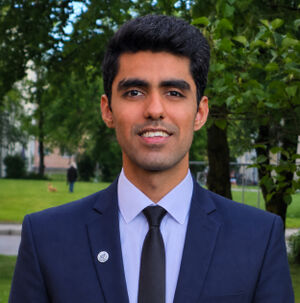
Sibtain Ali Thepdawala
Sibtain Ali Thepdawala is an aerospace engineer from Pakistan whose work focuses on Space Situational Awareness and autonomous spacecraft operations. He recently completed his MSc in Aerospace Engineering at the Technical University of Munich, where his research introduced SatAIS, a novel Satellite Automatic Identification System designed to enable direct satellite-to-satellite coordination for federated Space Traffic Management. His work combines systems engineering, onboard autonomy, and communication protocols to address the growing challenges of orbital congestion.
Alongside his research, Sibtain Ali co-founded Datafrost Space, an early-stage startup focused on democratising access to space data for downstream services, which received first prize in the Spaceport_SK Incubation Programme. His broader project experience spans human spaceflight, lunar exploration, and Earth observation. This includes SpiCy-BEXUS, a stratospheric flight experiment supported by ESA and DLR to investigate sustainable oxygen production using cyanobacteria, as well as work with the Slovak Space Office and Neuraspace.
Beyond technical contributions, he has remained actively engaged in international outreach and leadership, serving as National Coordinator for Pakistan at the Moon Village Association while supporting educational initiatives that encourage greater participation from young professionals in emerging space nations.
Sibtain Ali believes that the next era of space exploration will depend not only on technological advancement but also on international cooperation, interoperability, and shared responsibility. He sees sustainable space operations as a global challenge that cannot be solved by individual organisations or nations alone, but through collaboration across academia, industry, agencies, and policymakers. Through his work, he hopes to help build a future where space remains accessible, safe, and beneficial for all.

Franklin Josue Ticona Coaquira
Franklin Josue Ticona Coaquira is the Project Manager and co-founder of Waskiri-Sat, Bolivia’s first national nanosatellite, leading a team of 40+ students and professionals. Selected for the EXOLAUNCH–UNOOSA Exopod free-launch opportunity and scheduled for deployment in 2028, the mission provides early wildfire alerts through onboard AI, powered by a custom-designed ADCS and a novel deep learning-enhanced Optimal Guidance Unit. Through Waskiri-Sat, Franklin is working to establish Bolivia’s first Aerospace Laboratory alongside the Bolivian Space Agency and international partners.
As a PhD candidate in Space Systems Engineering at Kyushu Institute of Technology (Kyutech), He is an awardee of the UN/Japan long-term fellowship “Postgraduate Studies on Nano Satellites (PNST).” His research focuses on convex optimization for autonomous attitude and orbit guidance in low-thrust nanosatellites. Part of his work will be validated aboard the 1U CubeSat Waskiri-Sat (Bolivia) and the 3U CubeSat BIRDS-TM (Japan), where he leads the ADCS team, while also contributing to the 6U Mirzo Ulugbek nanosatellite, Uzbekistan’s first national satellite.
Previously, during his Master’s studies at Beihang University (China), supported by the Chinese Scholarship Council, Franklin developed a novel AOCS architecture for GNSS-R remote sensing using nanosatellite formation flying, leading an international team to second place in the Space University CubeSat Challenge.
Driven by the belief that advanced mathematics can transform emerging space nations, Franklin has trained more than 1,000 Bolivians in control engineering, astrodynamics, and robotics, helping build the talent that will lead Bolivia's future in space.
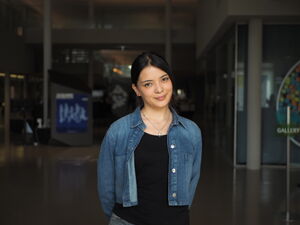
Nodira Tillayeva
Nodira Tillayeva is a graduate researcher from Uzbekistan pursuing a Master's degree in Electrical Engineering at Nagoya University, where she specializes in GeoAI, remote sensing, and location-based big data. Her work sits at the intersection of satellite technology and real-world impact, using space-derived data to address challenges in sustainable urban planning, water resource management, and public health.
Her research has been published in venues including HCII 2025, Infectious Disease Modelling, ACM KDD, and Research in Astronomy and Astrophysics, covering topics such as urban hotspot detection, mobility-aware infectious disease modeling, and urban area embeddings. Before moving to Japan, she developed geospatial and satellite-based systems at the Uzbek Space Agency and conducted climate data research at the Ulugh Beg Astronomical Institute of the Academy of Sciences of Uzbekistan.
She has brought this expertise to the global stage, speaking at the 6th UN Conference on Water Management Using Space Technologies and serving as a Call to Action Facilitator at the 11th APFSD Youth Forum, where she moderated the Central Asian youth session on data-driven climate action. She founded the Google Developer Group on Campus at Nagoya University, launched Steply, an AI platform that combines human mobility and climate data, and mentored hundreds of girls in Uzbekistan through the UniSat program, guiding them from satellite assembly to publishing their first research papers.
Nodira is working toward a future where space-derived data is a shared resource, accessible to every nation building its tomorrow.

Cristobal Troncoso
Cristóbal Troncoso Barrenechea is a Captain in the Chilean Air Force, serving in Chile's national space program as an Information Technology Leader. Additionally, he is the founder of Trobac IT, an early-stage startup developing operational intelligence solutions using AI, computer vision, and IoT for industrial and logistics environments. He also serves as Chile's National Point of Contact for the Space Generation Advisory Council, where he brings together the innovation and space ecosystems to share opportunities with younger generations.
His background combines a degree in Electronic Engineering with a Master's in Data Science. His work spans three ecosystems that rarely communicate with one another: institutional space, academic research, and entrepreneurship. He believes this intersection is where emerging space nations must operate, and countries like Chile must build space capabilities through public, private, and academic channels. Integration is essential.
This conviction shaped his recent leadership of the 10th South American Space Generation Workshop in Santiago, held in partnership with the International Air and Space Fair (FIDAE), reflecting Chile's maturing space ecosystem.
His IAC 2026 paper examines how decentralized and regional space centers can serve as strategic accelerators for emerging nations, with different focuses depending on each region's requirements. As an ESL grantee, he hopes to learn from peers facing similar challenges globally and bring back concrete approaches that Chile and the region can apply.
International cooperation is not merely a value statement for emerging space nations; it is the essential prerequisite for participating in space at all.

Jixian Wang
Jixian Wang is a doctoral researcher in Space Architecture at Harbin Institute of Technology (HIT), China, and a participant in TU Wien’s MBA in Space Architecture & Management. Based at HIT’s Complex Environments Architecture Research Institute, his research focuses on lunar research station prototypes, integrating mission scenarios, systems engineering, and human-centered design to support sustainable human presence beyond Earth.
Since 2022, he has contributed to China’s first Key Program of the National Natural Science Foundation of China dedicated to lunar architecture research. His work spans reconfigurable lunar habitats, lunar lava tube utilization, protective shelter design, and phased habitat development methodologies. He has authored seven academic publications, secured four patents and software copyrights, and received distinctions including First Prize in the MV2050 Lunar Competition (Architecture Track) and the 2025 Heilongjiang Provincial Science and Technology Progress First-Class Award.
Currently conducting research in Vienna through support from the China Scholarship Council (CSC), he actively engages with the international space community through forums on lunar development and space policy, including events organized by the UNOOSA. As a young researcher from one of China’s leading aerospace universities, he is committed to serving as a bridge between China’s emerging space architecture community and global partners. He has also contributed to establishing the Space Architecture Professional Committee of the Architectural Society of China, helping build an internationally oriented and interdisciplinary platform for collaboration.Guided by the principles of peace, sustainability, and international cooperation, he seeks to advance collaborative solutions for humanity’s future beyond Earth.

Racheal Wanyana
Wanyana is the Principal Advisor at the Space Law and Security Advisory, an international firm dedicated to providing governments with legal-strategic expertise to build robust and adaptive legal, regulatory, and institutional frameworks that anticipate and mitigate security risks in the space domain. She leads the firm’s research and advisory portfolio, and strategic engagements with governments, international institutions, and multilateral bodies. Her research is focused on understanding the applicability of national and international laws to hybrid and greyzone space threats as well as under-explored regions of space.
Previously, Wanyana held advisory and contractual roles at renowned international organisations including Saferworld, Transparency International Secretariat, Transparency International Defence & Security, Forum on the Arms Trade, and Chr. Michelsen Institute, where she provided technical support and accompaniment to governments, intergovernmental agencies and global programmes at the intersection of international law, gender, arms control, security sector reform, peace and security, and anti-corruption. She is a Doctor of law and Security candidate at NOVA University of Lisbon, and holds a Master of Laws Degree in European and International Law from the National and Kapodistrian University of Athens. Wanyana also hosts the Space Advisory Podcast, which delivers incisive commentary on space law and security.
Wanyana believes international cooperation is essential for maintaining peace and security in space. The Outer Space Treaty, while not perfect, provides a strong guiding framework for meaningful, inclusive and equitable cooperation. However, the continued legitimacy of the treaty depends on our collective commitment to its core principles and multilateral dialogue to build a common understanding of responsible behaviour in outer space.